Cold email is a message you send from your own mailbox, in a one-to-one and personal tone, to someone who doesn't know you yet but may have a legitimate commercial interest in your product or service. Done well, cold email is one of the most scalable and lowest-cost channels for reaching new customers in B2B sales. Done badly, it turns into spam, burns your reputation and creates legal risk. In this guide we explain, step by step and using the 5W1H method, what cold email is, how it differs from spam, how to write a good cold email, the logic of a follow-up sequence, deliverability, the legal framework, and how to set all of this up end to end with FreshSignal.
What Is Cold Email?
Cold email (cold outreach) is a commercial first-contact message you send to a recipient with whom you have no prior relationship or communication. The word "cold" comes from the fact that the recipient doesn't know you yet — just as with a cold call. But modern cold email is not bulk advertising blasted to random address lists. A good cold email is targeted, personal and genuinely relevant to the recipient — a message that feels written specifically for them.
The core logic of cold email is this: if you reach the right person, at the right time, with a clear offer that can solve a problem they have, your message is valuable even if they don't know you. For example, a software company's sales team might reach the digital marketing managers of companies in a particular sector and offer a concrete benefit. As long as it's a legitimate offer that genuinely helps the recipient, this is a useful contact rather than an intrusive one.
ℹ️ Short definition
Why Does Cold Email Matter? (Why)
There are concrete reasons cold email is so widely used in B2B sales and marketing. For companies with no advertising budget or with limited brand awareness, cold email is the most economical way to reach the right decision-maker directly. Instead of waiting for the buyer through advertising, you go to the right person.
- Direct access to decision-makers: You land in the inbox of the person you're targeting, without relying on ad algorithms, intermediaries or chance.
- Scalability: While preserving one-to-one quality, you can systematically reach many recipients using personalisation fields and follow-up sequences.
- Low cost: Because you send from your own mailbox, it requires no ad spend; the cost is in good data and a good process.
- Measurability: By tracking open, reply and positive-reply rates, you continuously improve your message and targeting.
- It starts conversations: The aim isn't an immediate sale; it's to open a dialogue with an interested person. The sale comes as the conversation continues.
In short, cold email is a way of taking distribution into your own hands. In B2B, the biggest determinant of success is not the data itself so much as the ability to get that data to the right person (distribution).
The Difference Between Cold Email and a Bulk Campaign
This is the most commonly confused topic, and understanding the distinction clearly is critical both for getting results and for staying on the right side of the law. Cold email and bulk (newsletter/campaign) email are not the same thing. They go to a different audience, in a different tone, from different infrastructure.
| Dimension | Cold Email (Follow-up Sequences) | Bulk Campaign |
|---|---|---|
| Recipient | Someone who doesn't know you but may have a legitimate commercial interest | Your consented / existing subscriber or customer list |
| Tone | One-to-one, personal, as if written to a single person | Brand voice, designed, addressed to many |
| Where it's sent from | Your own mailbox (BYOE — you connect SMTP) | Central bulk-sending infrastructure |
| Structure | Multi-step sequence: wait + condition + follow-up | Usually a single send or newsletter flow |
| Goal | Start a conversation, make first contact | Announcement, content, campaign, retention |
| Appearance | Plain-text-like, personal | Template, imagery, brand elements |
In FreshSignal these two concepts are deliberately separated. Cold email is done with the "Follow-up sequences" feature in the Automation section, and it goes out from your own mailbox (BYOE). Bulk campaigns run from separate infrastructure, aimed at consented lists. This separation is no accident: when cold contact is personal and one-to-one, it both delivers better and is perceived as more legitimate by the recipient.
💡 A practical distinction
How Does Cold Email Work? The Sequence Logic
A single cold email rarely gets a reply. Real results come from a multi-step follow-up sequence. The sequence logic is this: you send the first email, wait a set number of days, then — based on the recipient's behaviour (didn't open / didn't reply) — you send the next gentle follow-up. The key is to build the sequence conditionally.
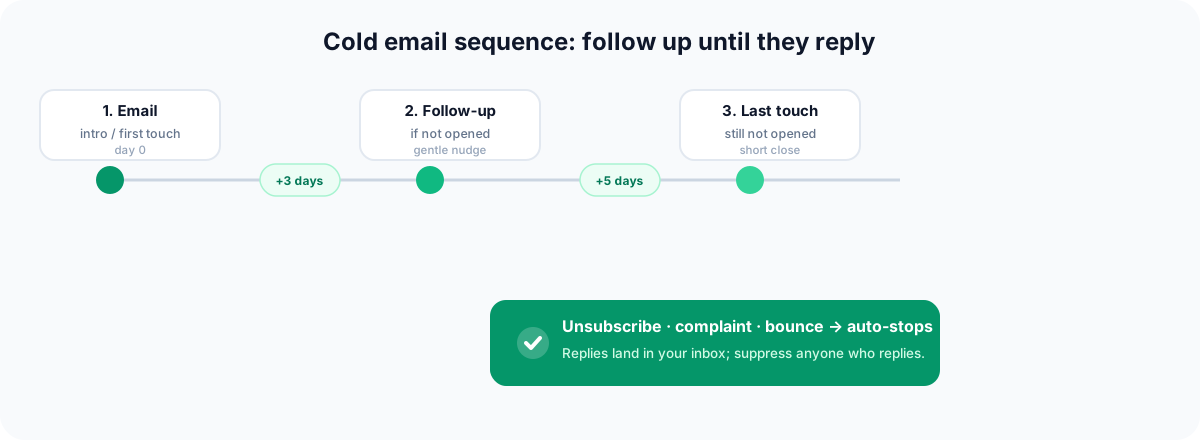
FreshSignal's Follow-up sequences let you build exactly this flow:
- Multi-step: A sequence consists of several steps — the 1st email, 2nd follow-up, 3rd follow-up, and so on.
- Waiting period: You place delays like "wait 3 days" or "wait 5 days" between each step.
- Condition: The next step is triggered only under a specific condition — for example if the previous email wasn't opened or wasn't clicked.
- Automatic stop: The sequence stops on its own for anyone who unsubscribes, complains or whose address bounces.
- Replies come to you: Because emails go from your own mailbox, replies land in your inbox. The system doesn't read your inbox, so to stop following up someone who replied you add their address to your suppression list.
- Personalisation: Fields like name, company and job title are filled in automatically at each step.
- A measured pace: By starting with a small batch and scaling wave by wave, you protect your mailbox reputation; the wait days between steps spread sending naturally.
- Enrol into a list: You add contacts to the sequence; the system runs the rest according to the flow.
💡 The most important behaviour
How to Write a Good Cold Email
A good cold email is short, personal and focused on a single clear action. Long, self-centred, generic emails get deleted unread. A good cold email has a specific anatomy.
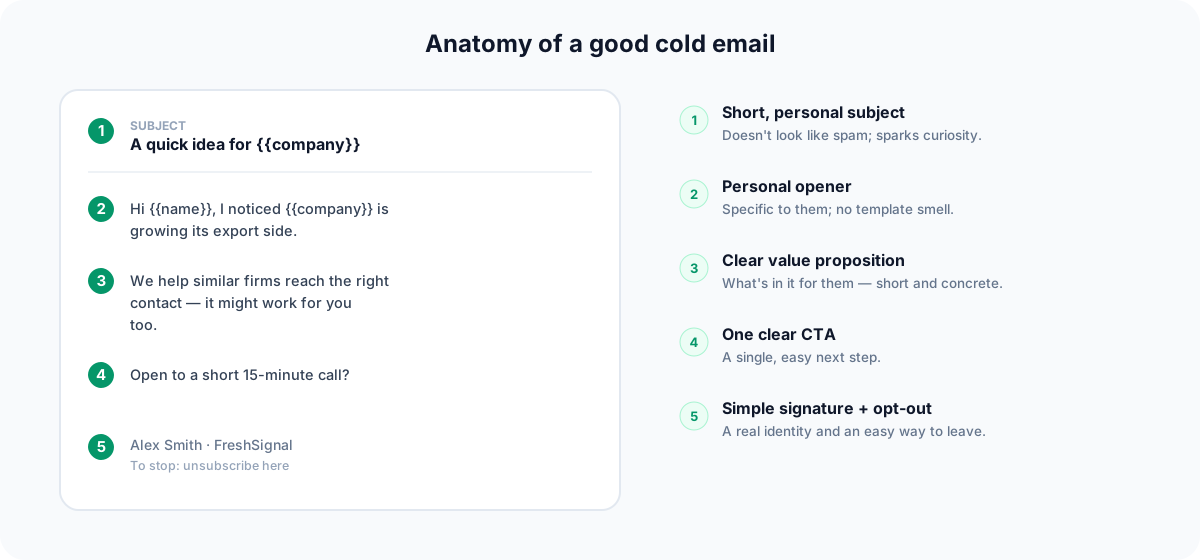
1. Subject line
The first thing that determines whether you get opened is the subject line. It should be short (ideally 3–6 words), curiosity-provoking and not look like an advert. Don't shout in capitals, don't rain exclamation marks, and avoid spam-triggering patterns like "FREE!!!". The best subject lines look plain, like a personal email: for example, they include the recipient's company name or a concrete topic.
2. Personal opening
The first sentence should be about the recipient, not about you. Opening with "We are company X, for 10 years we've..." is the most common mistake. Instead, open with a concrete observation about the recipient's company, sector or current situation. This makes it feel as though the email was genuinely written for that person.
3. Value proposition
State what benefit you'll provide the recipient in a single, clear sentence. Describe the outcome they'll get, not your features. A "we solve your particular problem in this way" perspective works far better than "we do this and that".
4. A single call to action (CTA)
At the end of the email, ask the recipient for one easy thing. Something like "Would you be open to a quick 15-minute call?" or "Would you like me to share the details?". Multiple requests create decision paralysis and lower your reply rate.
5. A simple signature
Your name, job title, company and clear identity details. The signature clearly shows who you are and makes it easy for the recipient to opt out. This is essential for both trust and legal compliance.
⚠️ A note on length
Cold Email with 5W1H
The most practical way to settle your cold email strategy is to apply the classic 5W1H framework: What, Why, Who for, Where, When, How. The infographic below summarises the whole framework at a glance.
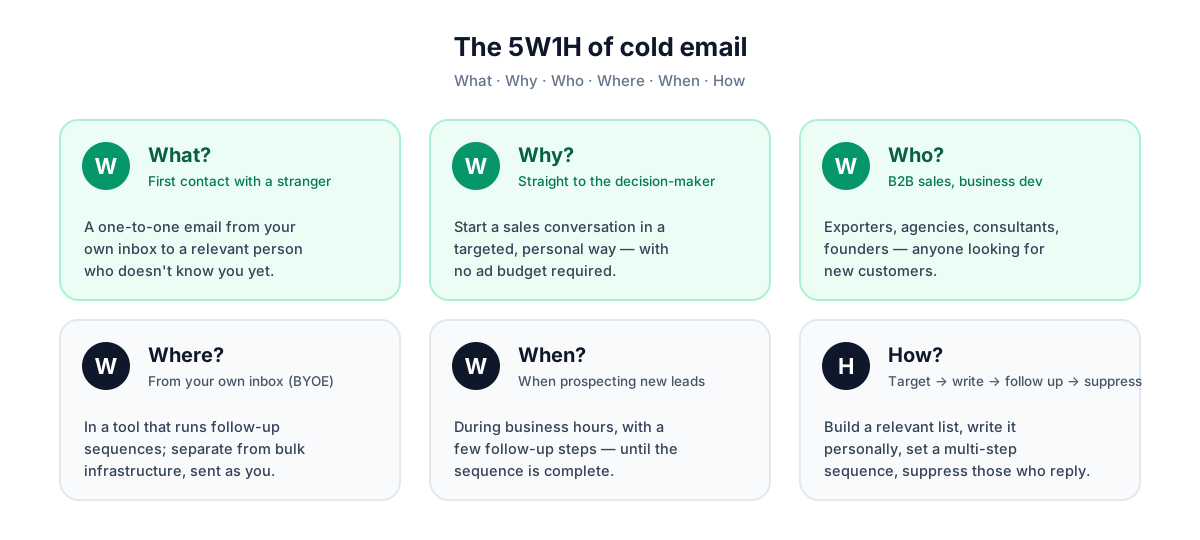
What? — What cold email is
A first-contact email sent from your own mailbox, in a personal tone, to a recipient who doesn't know you but may have a legitimate commercial interest. Not spam — a targeted and relevant offer.
Why? — Why you send it
To reach the right decision-maker directly, economically and measurably, and to start a conversation. To take distribution into your own hands.
Who for? — The target audience
Usually B2B sales, business development, agencies and freelancers send them, seeking new customers, partnerships, sales meetings or collaboration. The recipient is the right-profile person who can benefit from the value you offer (for example, the decision-maker in the relevant department).
Where? — Which channel
From your own mailbox (BYOE — you connect SMTP), separate from bulk campaign infrastructure. In FreshSignal this is done in the Automation > Follow-up sequences section.
When? — Timing
Weekdays, at hours when the recipient's inbox is calmer, are generally better. For the follow-ups in a sequence, waiting a few days between each step (e.g. 3–5 days) is both courteous and effective. When someone gets back to you, add them to your suppression list so the remaining follow-ups stop reaching them.
How? — Execution
By building the right list, designing a personalised sequence, pacing your sending sensibly and measuring the results (opens/replies/positive replies). The rest of this guide goes deeper into this "how".
Follow-up Strategy: Be Patient and Courteous
A significant share of replies comes not from the first email but from the follow-ups. People are busy; they may have missed your first email, forgotten it, or thought "I'll look later" and moved on. That's why a courteous follow-up sequence lets you remind them without being pushy.
- 2–4 steps is enough: Usually the first email plus 2–3 follow-ups strikes a good balance. Excessive follow-up is irritating.
- Every follow-up should add value: Instead of "just checking in", add a fresh angle, an example or a short question.
- Keep the intervals: Wait a few days between steps; don't pile emails back to back.
- A polite close: On the last follow-up, offer a courteous exit like "I understand if now isn't the right time — just let me know if you're not interested".
- Remove people who reply: Add anyone who replies to your suppression list so the remaining follow-ups don't reach them; the sequence also stops on its own on unsubscribe, complaint or bounce.
The best cold email strategy isn't persistence — it's relevance and respect. Saying something useful to the right person at the right time, and leaving an easy way out.— A cold outreach principle
Personalisation: A One-to-One Feel at Scale
The biggest paradox of cold email is this: you want to reach many people, yet each email must feel written to a single person. The solution is personalisation fields. Fields like name, company and job title are filled in automatically, so each recipient gets an email that reads as if written to them by name.
- Basic fields: First name, surname, company name, job title — these are the minimum standard.
- Contextual personalisation: Adding sector, city or a company-specific detail noticeably increases reply rates.
- Accurate data is essential: Personalisation only works if your data is correct. The wrong name or company is the fastest reason for an email to be deleted.
- Don't overdo it: Cramming a variable into every sentence feels artificial; 1–2 well-placed personal details are enough.
Because FreshSignal is built on 7.9 million company records across the UK and Turkey, you can find the right companies and relevant people and add them to your sequences with personalisation fields. When data and sending live in the same place, personalisation becomes far more reliable.
Deliverability: Reaching the Inbox
Even if you write the best email in the world, it's useless if it doesn't land in the recipient's inbox. Deliverability is the invisible but most decisive dimension of cold email. Sending from your own mailbox and sender reputation come into play here.
Sending from your own mailbox (BYOE)
In FreshSignal, cold email goes out from your own mailbox by connecting your own email account (SMTP). This makes the email look as though it comes from a real person and fits the one-to-one tone. In return, protecting that mailbox's reputation is your responsibility.
Practices that protect reputation
- Domain authentication records: Make sure your SPF, DKIM and DMARC records are configured correctly. These records prove that the email you send isn't forged.
- Scale the volume gradually: Suddenly sending hundreds of emails raises suspicion. Start with a small batch and grow wave by wave; the wait days between steps spread your sending naturally.
- Avoid spam words: Excessive capitals, lots of exclamation marks and patterns like "free/guaranteed/you've won" trigger spam filters.
- Stay plain-text: Instead of a pile of heavy images and links, plain, personal-looking emails deliver better.
- Keep your list clean: Sending to invalid addresses raises your bounce rate and lowers your reputation. Send to verified, relevant addresses.
- Send relevantly: The best deliverability signal is people not marking your email as spam. That only happens with genuinely relevant content.
⚠️ Reputation is fragile
The Legal and Consent Dimension: Be Careful
Cold email is a legally sensitive area, and its rules vary by region. The good news: the things that separate cold email from spam (relevance, legitimate interest, transparency, easy exit) are also the principles that keep you on the right side of the law. Act with knowledge of the framework below.
United Kingdom (UK GDPR + PECR)
In the UK, UK GDPR and PECR rules apply. For messages sent to corporate/B2B addresses, a legitimate interest basis can be used; but this requires a clear sender identity and an easy opt-out mechanism. Relevance and proportionality are decisive here. In particular, PECR treats corporate subscribers (companies and certain business addresses) differently from individual subscribers, so a well-targeted, relevant B2B message to a genuine business contact, with clear identification and a simple way to unsubscribe, is generally where you want to be.
EU and US
Across the European Union GDPR applies, and in the US the CAN-SPAM act applies. Both require a genuine sender identity, a non-misleading subject line and an easy way to unsubscribe.
Turkey (KVKK + IYS)
If you're contacting recipients in Turkey, the processing of personal data falls under KVKK, and commercial electronic messages are regulated by IYS (the Message Management System) and related legislation. While some exceptions exist for B2B (business-to-business) communication, the scope of these exceptions is limited and should be assessed carefully. A clear sender identity and easy opt-out are essential in every case.
Common principles — valid everywhere
- Send targeted and relevant: Not at random, but to someone who could genuinely be interested.
- Clear sender identity: Make it clear who you are and which company you're writing from.
- Easy exit: Anyone who doesn't want it should be able to leave the list easily.
- No deception: The subject line and content must be honest, not misleading.
- Transparency: Don't hide why you're writing or where you got their details.
⚠️ This is not legal advice
Metrics: How Do You Measure Success?
In cold email, leave the "is it good or bad" debate to numbers, not feelings. Track three core metrics and improve them over time.
| Metric | What it measures | Why it matters |
|---|---|---|
| Open rate | Percentage who open your email | Shows the strength of your subject line and sender name |
| Reply rate | Percentage who reply to you | Shows the relevance and persuasiveness of your message |
| Positive reply rate | Percentage of positive / interested replies | This is the real metric that generates actual opportunities |
- If the open rate is low: The problem is most likely in your subject line or your deliverability.
- If opens are high but replies are low: The problem is in the body of your message — the value proposition or CTA isn't clear enough.
- If there are replies but not positive ones: You're probably reaching the wrong audience; review your targeting.
- Don't look at a single email: Evaluate the sequence as a whole; most replies come from the follow-ups.
💡 Test and improve
Common Cold Email Mistakes
Most cold emails fail because of the same predictable mistakes. Avoiding them puts you well above average.
- Starting by talking about yourself: Opening with "We are company X...". The recipient is curious about their solution, not you.
- Writing too long: Emails that fill the screen don't get read. Be short and clear.
- Being generic: The same email to everyone. No personalisation, no reply.
- Making multiple requests: "Do this, also look at that, and give me a call." Stick to the single-CTA rule.
- A misleading subject line: An irrelevant or clickbait subject destroys both trust and legal compliance.
- Not following up: Sending one email and giving up. Most replies come from the follow-ups.
- Over-following up: Piling emails back to back for days. That's not persistence, it's harassment.
- Not offering an opt-out: Leaving no way out is both off-putting and a legal risk.
- Sending to a dirty list: Invalid addresses produce bounces and burn your reputation.
- Continuing to follow up after a reply: Chasing someone who has already replied looks unprofessional. Since replies land in your own inbox, add anyone who replies to your suppression list so the remaining steps don't reach them.
How to Do Cold Email with FreshSignal
FreshSignal combines the three pillars of the cold email process in one place: the data to find the right person (7.9M UK + Turkey companies), the Follow-up sequences to personalise and run the email, and the BYOE that lets you send from your own mailbox. The steps are:
- Find your target audience: Identify the right companies and relevant people in FreshSignal's company data using sector, city and other criteria.
- Connect your mailbox (BYOE): Connect your own email account via SMTP; emails will go out under your name.
- Build the sequence: In Automation > Follow-up sequences, design a multi-step sequence — 1st email, waiting period, condition (if not opened / not clicked), 2nd and 3rd follow-ups.
- Personalise: Insert the name, company and job title fields; let each recipient get an email that reads as one-to-one.
- Keep the pace measured: Start with a small batch and scale gradually to protect your mailbox's reputation.
- Enrol contacts into the sequence: Add your target list to the sequence; let the system run the flow.
- Suppress people who reply: Replies land in your own inbox; add anyone who replies to your suppression list so the remaining steps don't reach them. The sequence also stops on its own on unsubscribe, complaint or bounce.
- Measure and improve: Track open, reply and positive-reply rates and refine your subject/message/targeting.
ℹ️ Step-by-step guide
Pricing: Which Plan Includes Cold Email?
In FreshSignal, the Follow-up sequences (cold email) feature is available from the Professional plan ($39/month) onwards. The Starter plan ($19/month) covers core outreach needs like the proposal tool, CRM and company data. There is no free plan — instead, there are low-entry-price plans that generate real value.
| Plan | Price | Highlights |
|---|---|---|
| Starter | $19/month | Proposal tool, CRM, company data |
| Professional | $39/month | Starter + Follow-up sequences (cold email) and above |
For up-to-date plan details and higher tiers, see the pricing page.
Summary
Cold email is a first-contact message sent from your own mailbox, in a personal tone, to a recipient who doesn't know you but could legitimately benefit from your offer. What separates it from spam is relevance, legitimate interest, transparency and an easy exit. Real results come not from a single email but from a conditional, courteous follow-up sequence. Replies land in your own inbox, so you add anyone who replies to your suppression list to stop the follow-ups; the sequence also stops on its own on unsubscribe, complaint or bounce. A good email is short, personal and has a single CTA. To protect deliverability, pace your sending, fix your domain records and send relevantly. Legally, act with knowledge of the UK GDPR/PECR, GDPR, CAN-SPAM and KVKK/IYS frameworks — but remember, this is not legal advice. You can set up this entire process — data, sequence and BYOE — in one place from the FreshSignal dashboard.
💡 Ready to start?
What is cold email?
Cold email is a first-contact message you send from your own mailbox, in a one-to-one and personal tone, to a recipient who doesn't know you beforehand but may have a legitimate commercial interest in your product or service. Its aim isn't to sell immediately but to start a conversation.
What is the difference between cold email and a bulk campaign?
Cold email is sent to a recipient who doesn't know you but is relevant, from your own mailbox, in a personal tone, and it works as a multi-step sequence. A bulk campaign is sent to your consented or existing list, in your brand voice, from central sending infrastructure. In FreshSignal, cold email is done with 'Follow-up sequences' and is separate from the bulk campaign infrastructure.
Is cold email spam?
Done correctly, no. Four things separate cold email from spam: relevance (sending to someone who could genuinely be interested), legitimate interest, transparency (a clear sender identity) and an easy exit. Random, generic sends with no way out are spam.
Is cold email legal?
Cold email is legally sensitive and varies by region: in the UK, UK GDPR and PECR apply; in the EU, GDPR; in the US, CAN-SPAM; and for recipients in Turkey, KVKK and IYS. While some exceptions or a legitimate-interest basis are possible for B2B/corporate addresses, a clear sender identity and an easy opt-out are essential in every case. This information is not legal advice; verify your own obligations.
How do I stop follow-ups reaching someone who replied?
Because FreshSignal sends cold email from your own mailbox, replies land in your inbox; the system doesn't read your inbox, so it can't detect replies automatically. Add the replier's address to your suppression list and the remaining follow-up steps won't reach them. The sequence also stops on its own for anyone who unsubscribes, complains or whose address bounces.
How long should a good cold email be?
Usually between 50 and 125 words, short enough to read on a phone. The anatomy of a good cold email: a short attention-grabbing subject line, a personal opening, a clear value proposition, a single call to action (CTA) and a simple signature.
Which plan includes cold email in FreshSignal?
The Follow-up sequences (cold email) feature is available from the Professional plan ($39/month) onwards. The Starter plan ($19/month) covers the proposal tool, CRM and company data. There is no free plan.
Is it sent from my own mailbox?
Yes. In FreshSignal, cold email works on a BYOE (Bring Your Own Email) model; you connect your own email account via SMTP and the emails go out from your mailbox. This makes the email look real and personal; in return, you keep your sending pace measured to protect your mailbox's reputation.